
Introduction
Fast bowling is one of the most interesting factors of cricket. A truely rapid bowler can intimidate even the arena’s amazing batters with uncooked pace, bounce, and motion. Over the years, cricket has witnessed severa mythical rapid bowlers able to turning inside the ball at superb speeds that undertaking human reaction time.
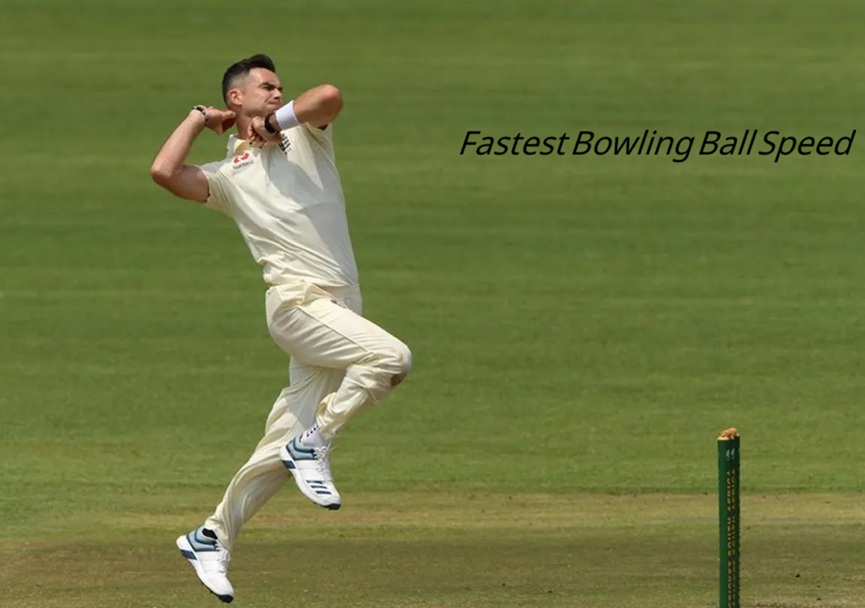
The time period fastest bowling ball speed refers to the very best speed recorded for a prison cricket delivery at some point of an actual in form. Modern era has made tempo size more correct than ever, allowing cricket fanatics to assess bowlers from one-of-a-kind generations.
From legendary speedsters like Shoaib Akhtar and Brett Lee to trendy stars which include Mitchell Starc, Mark Wood, and Lockie Ferguson, speedy bowling continues to entertain cricket fanatics round the arena.
This entire guide explores the quickest bowling speeds ever recorded, the fantastic speedy bowlers in records, elements affecting bowling tempo, training strategies, and captivating information approximately tempo bowling.
What Is the Fastest Bowling Ball Speed?
The quickest bowling ball tempo is the best pace recorded for a cricket transport. Speed is commonly measured in kilometers according to hour (km/h) and miles steady with hour (mph) the usage of radar technology positioned throughout the stadium.
As of nowadays, the quickest formally recorded transport in worldwide cricket is:
161.3 km/h (100.23 mph)
This super document belongs to Pakistan’s legendary rapid bowler Shoaib Akhtar, completed all through the 2003 ICC Cricket World Cup.
Fastest Bowling Speed Record
| Record | Details |
|---|---|
| Fastest Official Delivery | 161.3 km/h |
| Bowler | Shoaib Akhtar |
| Country | Pakistan |
| Against | England |
| Tournament | ICC Cricket World Cup 2003 |
| Speed in MPH | 100.23 mph |
This delivery remains considered one in all cricket’s finest milestones and has stood unbeaten for greater than a few years.
Top 10 Fastest Bowling Ball Speeds in Cricket History
| Rank | Bowler | Country | Fastest Speed |
| 1 | Shoaib Akhtar | Pakistan | 161.3 km/h |
| 2 | Brett Lee | Australia | 161.1 km/h |
| 3 | Shaun Tait | Australia | 161.1 km/h |
| 4 | Jeff Thomson | Australia | 160.6 km/h |
| 5 | Mitchell Starc | Australia | 160.4 km/h |
| 6 | Andy Roberts | West Indies | 159.5 km/h |
| 7 | Fidel Edwards | West Indies | 157.7 km/h |
| 8 | Mitchell Johnson | Australia | 156.8 km/h |
| 9 | Mohammad Sami | Pakistan | 156.4 km/h |
| 10 | Shane Bond | New Zealand | 156.4 km/h |
These bowlers are broadly appeared as a number of the quickest ever to play international cricket.
Shoaib Akhtar – The Rawalpindi Express
Shoaib Akhtar is extensively taken into consideration the quickest bowler in cricket data. Nicknamed the “Rawalpindi Express,” he terrified batters together with his explosive run-up, brilliant athleticism, and unrivaled tempo.
His record-breaking delivery of 161.3 km/h got here in opposition to England at some point in the 2003 World Cup. Even nowadays, no formally recorded delivery has surpassed that pace.
Apart from tempo, Akhtar generated steep soar and past due swing, making him considered one of cricket’s most feared bowlers.
Brett Lee – Australia’s Speed Machine
Brett Lee continuously bowled above 150 km/h throughout his career. Unlike many rapid bowlers, Lee mixed pace with brilliant accuracy.
His fastest recorded speed reached 161.1 km/h, making him some of the fastest bowlers in cricket records.
Lee executed a key role in Australia’s dominance at some stage in the early 2000s and remains one of the u . S .’s best speedy bowlers.
Shaun Tait – Extreme Pace
Shaun Tait possessed one of the most uncommon bowling movements in cricket history. His explosive movement allowed him to often exceed 100 and 150 km/h.
His fastest transport furthermore reached 161.1 km/h, matching Brett Lee’s maximum speed.
Although accidents shortened his global profession, Tait stays truly without a doubt one among cricket’s fastest bowlers.
Jeff Thomson – The Pioneer of Extreme Pace
During the Seventies, Jeff Thomson shocked batters along along with his lightning-speedy bowling.
Many cricket historians receive as proper with Thomson can also furthermore have bowled even quicker than first rate facts advocate due to the truth present day radar era modified into unavailable all through an awful lot of his profession.
His officially identified fastest transport is a hundred and160.6 km/h.
Mitchell Starc – Modern-Day Speed King
Mitchell Starc is amongst ultra-modern fastest left-arm bowlers.
He has continually stunned at 150 km/h at the same time as generating lethal swing with the cutting-edge ball.
His fastest transport of one hundred 160.4 km/h demonstrates that left-arm bowlers also can produce excellent pace.
Fastest Active Fast Bowlers
| Bowler | Country | Highest Recorded Speed |
| Mitchell Starc | Australia | 160.4 km/h |
| Mark Wood | England | 157+ km/h |
| Lockie Ferguson | New Zealand | 157+ km/h |
| Anrich Nortje | South Africa | 156+ km/h |
| Gerald Coetzee | South Africa | 155+ km/h |
These bowlers keep to pride lovers with actual precise tempo in international cricket.
How Bowling Speed Is Measured
Modern cricket uses advanced radar generation to calculate bowling tempo.
The radar measures:
- Ball speed proper now after release.
- Distance covered in milliseconds.
- Speed in km/h and mph.
- Accuracy thru automated systems.
Television broadcasts show the ones speeds nearly right away after each shipping.
Factors That Affect Bowling Speed
Several factors have an effect on how rapid a bowler can bowl.
Physical Strength
Strong legs, hips, shoulders, and center muscle mass generate maximum momentum.
Run-Up
A easy and controlled run-up allows transfer electricity effectively into the delivery.
Bowling Action
A technically correct bowling movement minimizes power loss and maximizes tempo.
Fitness
Elite speedy bowlers study traumatic electricity and conditioning applications to maintain pace.
Height
Taller bowlers frequently generate greater leap due to a higher release detail.
Flexibility
Flexible muscle mass enhance frame rotation and help reduce damage hazard.
Fast Bowling Speed Categories
| Bowling Type | Speed Range |
| Medium Pace | 110–125 km/h |
| Medium Fast | 125–135 km/h |
| Fast Medium | 135–145 km/h |
| Fast | 145–150 km/h |
| Express Pace | Above 150 km/h |
Express tempo is exceptionally unusual and done by means of the usage only a small variety of worldwide bowlers.
Fastest Bowling Ball Speed by means of the usage of Country
| Country | Famous Fast Bowler | Top Speed |
| Pakistan | Shoaib Akhtar | 161.3 km/h |
| Australia | Brett Lee | 161.1 km/h |
| England | Mark Wood | 157+ km/h |
| New Zealand | Shane Bond | 156.4 km/h |
| South Africa | Anrich Nortje | 156+ km/h |
| West Indies | Fidel Edwards | 157.7 km/h |
| India | Umran Malik | 157 km/h (approx.) |
Every cricket-playing state has produced awesome fast bowlers, but Pakistan and Australia have historically dominated the fee charts.
Fastest Bowlers in Indian Cricket
India has historically relied more on swing and seam, but modern-day years have visible the emergence of actual pace bowlers.
| Bowler | Highest Speed |
| Umran Malik | Around 157 km/h |
| Mohammed Shami | Around 153 km/h |
| Jasprit Bumrah | Around 153 km/h |
| Mayank Yadav | Around 156 km/h |
| Ishant Sharma | Around 152 km/h |
Indian cricket keeps to provide bowlers capable of continuously bowling above one hundred 45 km/h.
Can Anyone Bowl at one hundred sixty km/h?
Bowling at 160 km/h requires notable athletic capability.
A bowler goals:
- Exceptional energy
- Perfect biomechanics
- Years of expert education
- Outstanding flexibility
- High staying energy
- Injury-resistant body mechanics
Very few bowlers in cricket statistics have crossed the 165 km/h mark.
Why Fast Bowlers Get Injured More Often
Fast bowling locations large stress on the frame.
Common accidents include:
- Stress fractures
- Hamstring accidents
- Knee issues
- Shoulder accidents
- Back accidents
- Ankle ligament harm
Professional organizations cautiously screen rapid bowlers’ workloads to lessen harm risk.
Training to Increase Bowling Speed
Professional speedy bowlers beautify speed through primarily based training.
Key regions encompass:
Strength schooling develops the lower frame, center, and higher body to generate greater electricity.
Sprint education enhances acceleration and momentum at some point of the run-up.
Plyometric bodily games improve explosive pressure and athletic overall overall performance.
Bowling drills refine technique and efficiency.
Recovery practices which encompass stretching, rubdown, hydration, and good enough sleep assist preserve top traditional overall overall performance.
Interesting Facts About Fast Bowling
| Fact | Information |
| Fastest official delivery | 161.3 km/h |
| First bowler to officially exceed 100 mph | Shoaib Akhtar |
| Fastest Australian bowler | Brett Lee |
| Fastest left-arm bowler | Mitchell Starc |
| Fastest Indian pacer | Umran Malik (among the quickest recorded) |
| Speed displayed on TV | Measured using radar technology |
Why Pace Matters in Cricket
Extreme pace reduces a batter’s response time, forcing quicker choice-making and growing the chance of mistakes. Fast bowlers moreover create soar, movement, and mental strain, making them precious fit-winners in all codecs of the sport.
However, pace on my own is not sufficient. The most successful fast bowlers integrate tempo with accuracy, swing, seam motion, and clever strategies. Legends which include Glenn McGrath proved that precision can be in reality as powerful as uncooked speed, at the same time as bowlers like Shoaib Akhtar and Brett Lee tested how devastating actual specific pace may be while paired with talent.
Conclusion
The pursuit of the quickest bowling ball pace has concerned cricket lovers for generations. Shoaib Akhtar’s superb 161.3 km/h speed remains the benchmark for precise pace and is certainly one of the sport’s most iconic facts. While several bowlers have come close, the record continues to stand as a picture of remarkable athletic achievement.