
Introduction
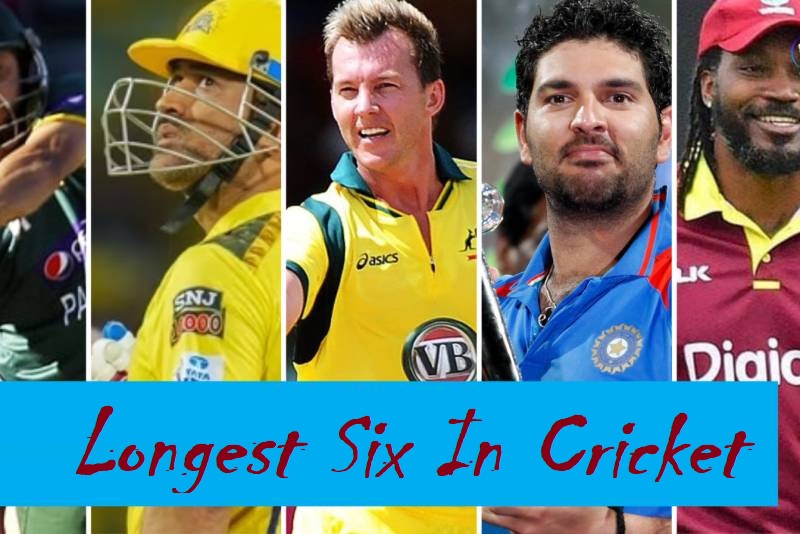
Cricket is a game packed with thrilling moments, however nothing excites enthusiasts greater than a large six soaring into the stands. The “longest six in cricket” is one of the most talked-about information in the game, because it showcases raw energy, perfect timing, and top notch talent. Over the years, numerous legendary gamers have shocked audiences with the aid of hitting significant sixes which have traveled implausible distances.
From international cricket to franchise leagues just like the Indian Premier League, enthusiasts have witnessed a few jaw-losing hits that have end up part of cricket folklore. Whether it’s a towering hit through Shahid Afridi or a immense strike with the aid of Chris Gayle, these moments define the power-hitting generation of contemporary cricket.
In this article, we are able to discover the longest sixes in cricket history, analyze the players behind them, apprehend how those distances are measured, and dive deep into the evolution of huge hitting in cricket.
What is the Longest Six in Cricket?
The longest six in cricket refers to the maximum distance a cricket ball has traveled after being hit over the boundary with out touching the floor. While professional measurements can range, a few sixes have been estimated using superior monitoring technologies, stadium dimensions, and visual evaluation.
The longest six ever recorded is extensively credited to Shahid Afridi, who reportedly hit a six measuring 158 meters in the course of a suit in South Africa. This remarkable strike stays one of the maximum iconic moments in cricket records.
Top 10 Longest Sixes in Cricket History
Below is a detailed desk of the most important sixes ever recorded:
| Rank | Player | Distance (Meters) | Opponent | Format | Year |
|---|---|---|---|---|---|
| 1 | Shahid Afridi | 158 m | South Africa | ODI | 2013 |
| 2 | Brett Lee | 143 m | West Indies | Test | 2005 |
| 3 | Martin Guptill | 127 m | South Africa | T20 | 2012 |
| 4 | Liam Livingstone | 122 m | Pakistan | T20 | 2021 |
| 5 | Chris Gayle | 119 m | India | T20 | 2010 |
| 6 | Yuvraj Singh | 119 m | Australia | T20 | 2007 |
| 7 | MS Dhoni | 118 m | New Zealand | ODI | 2009 |
| 8 | Corey Anderson | 122 m | India | ODI | 2014 |
| 9 | Mark Waugh | 120 m | New Zealand | Test | 1997 |
| 10 | Adam Gilchrist | 122 m | England | Test | 2006 |
Legendary Players Known for Long Sixes
Shahid Afridi – The Boom Boom King
Shahid Afridi is often known as “Boom Boom Afridi” for a purpose. His aggressive batting style and fearless method made him one of the most risky hitters in cricket history. His 158-meter six continues to be unmatched and stays a benchmark for strength hitters.
Afridi’s ability to clear boundaries resultseasily made him a fan favourite international. He played a crucial role in popularizing attacking cricket in constrained-overs formats.
Chris Gayle – The Universe Boss
Chris Gayle is some other call synonymous with big sixes. Known because the “Universe Boss,” Gayle has hit a number of the longest sixes in each global cricket and the IPL.
His document-breaking innings in T20 cricket include more than one sixes over a hundred meters. Gayle’s strength lies in his timing and capacity to generate colossal electricity with minimum attempt.
MS Dhoni – The Helicopter Finisher
MS Dhoni is understood for his unique “helicopter shot,” which has produced some massive sixes. His potential to finish fits with big hits has made him one of the greatest finishers in cricket history.
Dhoni’s six within the 2011 World Cup very last is one of the most iconic moments in cricket.
Yuvraj Singh – Six Sixes Hero
Yuvraj Singh became a global sensation when he hit six sixes in an over in the course of the 2007 T20 World Cup. Many of those sixes traveled over 100 meters, showcasing his massive electricity.
Liam Livingstone – Modern Power Hitter
Liam Livingstone represents the new generation of power hitters. His 122-meter six in opposition to Pakistan is one of the longest in recent years.
Longest Sixes in IPL History
The IPL has been a level for explosive batting performances. Here are a number of the longest sixes in IPL:
| Player | Distance | Team | Year |
|---|---|---|---|
| Albie Morkel | 125 m | CSK | 2008 |
| Praveen Kumar | 124 m | RCB | 2013 |
| Adam Gilchrist | 122 m | KXIP | 2011 |
| Robin Uthappa | 120 m | RCB | 2010 |
| Chris Gayle | 119 m | RCB | 2013 |
The league has performed a large role in encouraging aggressive batting and entertaining enthusiasts worldwide.
Factors Behind a Long Six
Bat Speed and Power
A excessive bat speed combined with robust wrists helps generate maximum power. Players like Chris Gayle excel in this element.
Timing
Perfect timing is frequently extra vital than brute power. Even players with moderate energy can hit lengthy sixes in the event that they connect the ball perfectly.
Bat Technology
Modern bats are designed to maximize strength. The sweet spot is larger, permitting players to hit longer sixes.
Pitch Conditions
Flat pitches with properly leap make it less complicated to hit huge shots.
Ball Type
New balls journey faster and farther in comparison to old balls.
Evolution of Six-Hitting in Cricket
In the early days of cricket, sixes had been uncommon. Players targeted greater on technique and placement instead of strength. However, with the advent of restricted-overs cricket and T20 codecs, the game has advanced dramatically.
Modern players train mainly for energy hitting. Fitness levels have stepped forward, and modern pictures like the scoop, reverse sweep, and helicopter shot have emerge as commonplace.
Leagues just like the Indian Premier League have revolutionized the game by worthwhile aggressive batting.
Technology Used to Measure Six Distance
Measuring the gap of a six isn’t usually honest. Here are some techniques used:
| Method | Description |
|---|---|
| Hawk-Eye | Uses cameras to track ball trajectory |
| GPS Tracking | Estimates distance using sensors |
| Visual Estimation | Based on stadium dimensions |
| Replay Analysis | Frame-by-frame calculation |
While contemporary era gives correct measurements, older statistics are frequently primarily based on estimates.
Famous Matches Featuring Long Sixes
India vs England 2007 T20 World Cup
Yuvraj Singh hit six consecutive sixes, growing records.
Pakistan vs South Africa 2013
Shahid Afridi smashed the longest six ever recorded.
IPL 2013 – Gayle’s Storm
Chris Gayle played one of the finest T20 innings, hitting a couple of big sixes.
Comparison of Power Hitters
| Player | Style | Strength | Famous Shot |
|---|---|---|---|
| Shahid Afridi | Aggressive | Raw Power | Straight Hit |
| Chris Gayle | Calm | Timing + Power | Lofted Drive |
| MS Dhoni | Finisher | Wrist Power | Helicopter Shot |
| Yuvraj Singh | Stylish | Clean Hitting | Pull Shot |
| Liam Livingstone | Modern | 360° Hitting | Switch Hit |
Why Fans Love Big Sixes
Big sixes are the maximum interesting part of cricket. They:
- Change the momentum of the game right away
- Boost group morale
- Entertain spectators
- Create unforgettable moments
A unmarried six can turn the match round, making it a crucial factor of present day cricket.
Records That May Never Be Broken
Some facts, just like the 158-meter six by way of Shahid Afridi, appear nearly impossible to break. With increasing competition and improved bowling techniques, hitting such huge sixes constantly is extremely challenging.
Future of Power Hitting
The destiny of cricket will probable see even larger sixes because of:
- Advanced education strategies
- Better device
- Stronger and healthier gamers
- Shorter codecs encouraging competitive play
Young gamers are already pushing the limits of what’s possible in cricket.
Conclusion
The file for the longest six in cricket represents the final display of power and ability. From Shahid Afridi to Chris Gayle, many gamers have left their mark with tremendous hits that retain to inspire fans.
As cricket evolves, we may also witness even longer sixes within the future. However, the mythical hits of the past will constantly continue to be a benchmark for greatness.
Whether you’re a fan of classic cricket or current T20 leagues just like the Indian Premier League, one thing is positive—not anything beats the joys of watching a ball disappear into the sky for a massive six.